


Face Fit Train the Tester
- Accreditation:
- ESS Certificate
- Course Duration:
- Half Day
- Valid for:
- 3 years
To book by phone or make an enquiry call us on
0115 8970 529Face Fit Train the Tester
To make an enquiry call our team on 0115 8970 529 or use the form below
This Face Fit Train the Tester course will provide those who require it, the knowledge of how to conduct face fit testing using the Qualitative method. If you provide respiratory protective equipment (RPE) to your employees, or are responsible for Health and Safety within your organisation, then it is essential that fit testing is carried out correctly and documentary evidence is recorded to demonstrate the RPE is suitable for the wearer and has passed a fit test.
Please note: even though these training courses are sometimes referred to as "train the trainer" they are only to provide training to allow the attendees to conduct Qualitative face fit testing, not to enable them to teach the subject themselves.
All courses are delivered by a Fit2Fit accredited tutor.
Face Fit Train the Tester Course Overview
INDG 479 recommends that RPE Fit Testing should only be conducted by a trained and competent person. To be competent, the fit test operator should have adequate knowledge and have received adequate instruction and training.
Recent research indicates that up to 50% of all RPE used does not offer the wearer the level of protection assumed and one of the major reasons is that it simply does not fit! Yet, under the regulations RPE must be correctly selected and this includes, for many types of RPE, a face piece Fit Test conducted by a trained and competent person.
Is Face Fit Testing a legal requirement?
Yes, face fit testing is a legal requirement under various health and safety regulations. The Health and Safety Executive (HSE) guidance notes INDG 479 and HSG53 specify that if you provide Respiratory Protective Equipment (RPE) to your employees, you must ensure that it fits correctly. This involves conducting a face fit test, carried out by a trained and competent person, to demonstrate that the RPE is suitable for the wearer. Proper documentation of the fit test is essential to comply with these regulations and to ensure that the RPE provides the intended level of protection.
What is Face Fit Testing?
Face fit testing is a method used to ensure that a respirator or mask fits the wearer correctly and provides the necessary level of protection. It involves a series of tests conducted by a trained and competent person to check the seal between the face and the respiratory protective equipment (RPE). The test ensures that the RPE is suitable for the individual wearer and can effectively prevent exposure to hazardous substances. This process includes both qualitative and quantitative methods, with the qualitative method being commonly used for half-face masks. Proper face fit testing is crucial to ensure compliance with health and safety regulations and to maintain a safe working environment.
Why Perform a Fit Test?
If you provide respiratory protective equipment (RPE) to your employees then it is essential that you have documentary evidence to show the RPE fits the wearer. By subjecting each wearer to a face-fit test you can be sure that your organisation is fulfilling the requirements laid out in the Health & Safety Executives (HSE) guidance notes INDG 479 & HSG53.
Do I Need to be Clean Shaven for a Face Fit Test?
For tight-fitting RPE (e.g., disposable masks, half masks, full-face masks), HSE guidance requires the wearer to be clean shaven in the seal area. Any facial hair (stubble, beards, sideburns, etc.) where the mask contacts the face will prevent a valid fit test.
Delegates who are not clean shaven can still complete the course but may not be able to act as the “test subject” during practical demonstrations.
For loose-fitting RPE (e.g., powered hoods/helmets), facial hair does not affect the fit, and participation is not restricted.
We therefore recommend attending clean shaven if you would like to fully take part in all aspects of the practical training.
How Often Should Face Fit Testing be Done According to HSE?
According to the Health and Safety Executive (HSE) guidelines, face fit testing should be conducted whenever a new type of tight-fitting respiratory protective equipment (RPE) is issued, or if there are significant changes to the wearer’s facial characteristics or the RPE itself. It is also recommended to conduct re-testing at regular intervals, typically every two years, to ensure continued effectiveness. Additionally, re-testing should be performed if there are any changes that could affect the fit of the mask, such as significant weight loss or dental work. Regular face fit testing helps ensure ongoing compliance with health and safety regulations and maintains the protective efficacy of the RPE.
Course Content
This course is for trainees who want to undertake their own face fit testing programme.
The training includes:
- Background to Face Fit Testing
- Legislation and Guidance, INDG 479
- Set-up of Equipment
- The Sensitivity Test
- Fit Test Protocols
- Pass Levels
- Practical face fit testing
- Troubleshooting & Problem Solving
- Fit Test Failures and Re-Tests
- Planning & Managing a Fit Testing Program
Please note: that RPE should be selected, maintained and used by trained and competent people, it is the employers responsibility to ensure compliance with this.
Entry Requirements
A good level of written and spoken English is required.
Persons attending MUST be clean shaven. The fit test section of the course cannot be carried out if there is any hair growth between the skin and the face piece sealing surface e.g. stubble beard growth, beard, moustache etc.
The wearer should not eat, drink (except plain water), smoke or chew gum for at least 30 minutes before the test.
The trainer will have a selection of masks (P1, P2, P3) with him on the day; however, if there is a specific type of mask you use then please let us know in advance and bring this with you on the day.
Fit Testing Kit
We can provide a full face fit testing kit at an additional cost of £200+Vat. Please ensure you have ordered this from your account manager if you require a kit.
Learner Numbers
In order to ensure the interaction between the delegates and the tutor is spread evenly and effectively, the maximum number of delegates allowed on a course is six.
Face Fit Train the Tester
Please enter your details below to continue
-
- Ilkeston, DE7 8JF
- 11/09/2026
- AM Course
- 3 spaces left
£190
Book Now -
- Cricklewood, NW2 3ED
- 24/09/2026
- AM Course
- 4 spaces left
£190
Book Now -
- Cricklewood, NW2 3ED
- 24/09/2026
- PM Course
- 5 spaces left
£190
Book Now -
- Tottenham - North London
- 15/10/2026
- AM Course
- 10 spaces left
£190
Book Now -
- Tottenham - North London
- 15/10/2026
- PM Course
- 10 spaces left
£190
Book Now -
- Ilkeston, DE7 8JF
- 16/10/2026
- AM Course
- 4 spaces left
£190
Book Now -
- Cricklewood, NW2 3ED
- 29/10/2026
- AM Course
- 10 spaces left
£190
Book Now -
- Cricklewood, NW2 3ED
- 29/10/2026
- PM Course
- 10 spaces left
£190
Book Now -
- Tottenham - North London
- 12/11/2026
- AM Course
- 10 spaces left
£190
Book Now -
- Tottenham - North London
- 12/11/2026
- PM Course
- 10 spaces left
£190
Book Now
Assessment
Delegates of the Face Fit Train the Tester course will be required to participate in several fit testing scenario’s set by the trainer using a variety of Respiratory Protective Equipment (RPE). This will also include a short verbal test for troubleshooting and identifying reasons for failure of a face fit test.
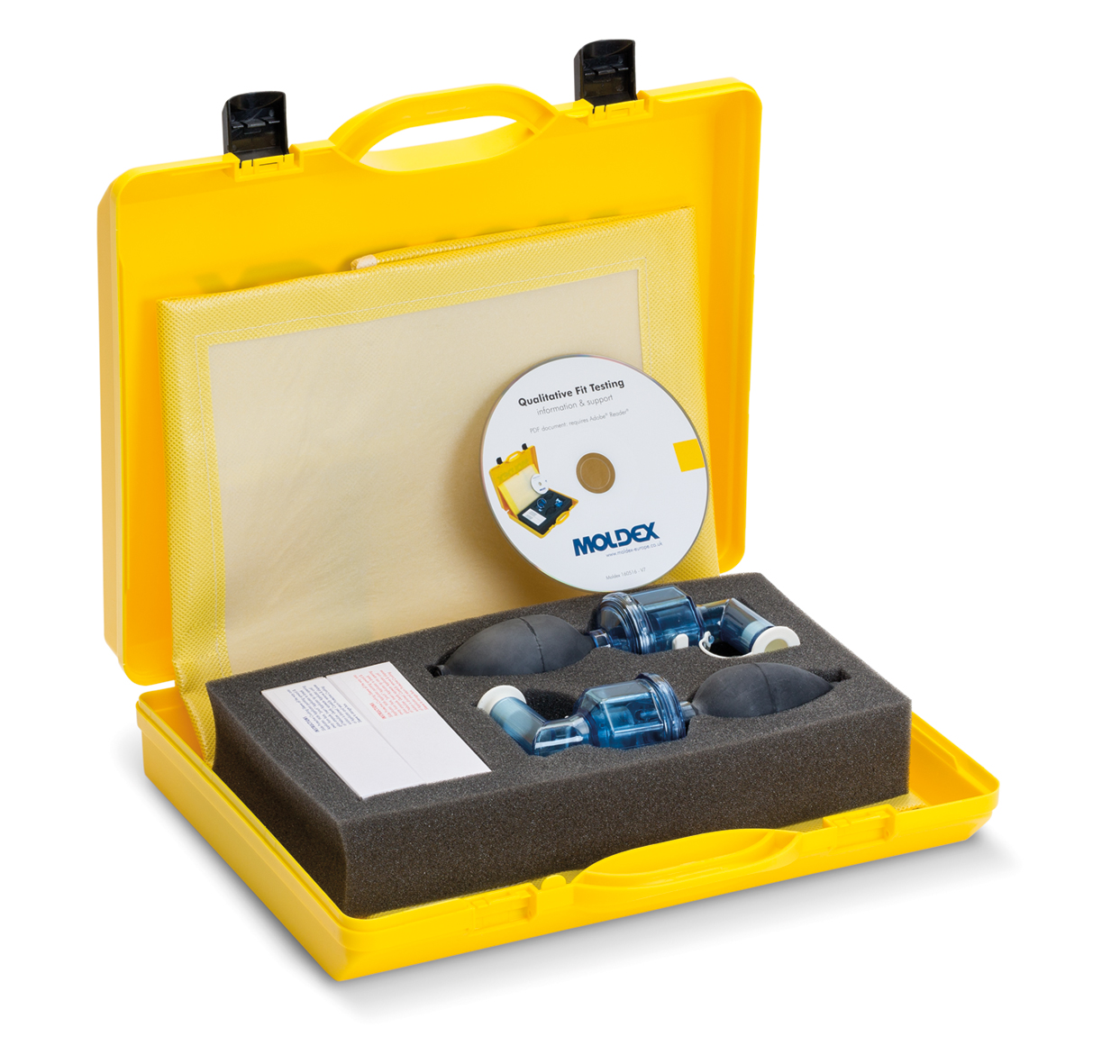
Please note you will require a Face Fit Testing Kit to carry out your own testing - you can purchase one from our online shop or by contacting us.
Certification
For those who successfully complete the Face Fit Train the Tester course they will receive an Essential Site Skills digital PDF certificate valid for 3 years, which includes the Fit2Fit logo identifying the training was delivered by a Fit2Fit Accredited Trainer.
This course will also provide you with document templates to record your in-house face fit testing.
More Details
Legal Requirements
By subjecting each of your employees to a face-fit test you can be sure that your organisation is fulfilling the requirements laid out in the Health & Safety Executive’s (HSE) INDG 479 and the statutory duties placed upon you under regulations such as the COSHH Regulations 2002.
A fit test should be carried out as part of the initial selection process for RPE and where an untested facepiece is in use. We recommended repeat fit testing for any RPE annually as part of a proactive approach to fit testing. For licensed Asbestos removal refer to L143 as more frequent testing may be required.
RPE
With an estimated 12,000 people dying each year from respiratory Ill Health, the correct selection of RPE is vital to ensure our workforce is safe and free from deadly airborne contaminants
ESS are a trusted and approved RPE provider of market leading brands with a varied selection of all types of mask, size and protection capability including FFPs, half and full masks and powered air.
Contact us for further information or to place an order.
FAQs
No.
Completing the course provides training in qualitative face fit testing, but it does not make the individual a Fit2Fit accredited tester. Fit2Fit accreditation requires a separate written examination and practical assessment in the applicant’s chosen testing method.
Qualitative testing can be used for disposable filtering facepieces, including FFP1, FFP2 and FFP3 masks, and reusable half masks. It cannot be used to test full-face masks, which require an appropriate quantitative face fit testing method.
No.
A successful face fit test applies to the specific make, model, material and size of mask worn during the test. If an employee uses different mask types, models or sizes, each must be tested separately, and the exact mask that passed should be made available for use.
The fit test report should identify the wearer, mask make, model and size, testing method, exercises completed, pass level, result, test date and tester details. It should also record relevant filters, accessories, other PPE and the equipment used. HSE guidance states that RPE examination and testing records should be retained for at least five years.