


Latest News
AI & Construction Safety: How Predictive Analytics Improves Training Outcomes
Posted on Monday, 23rd March 2026
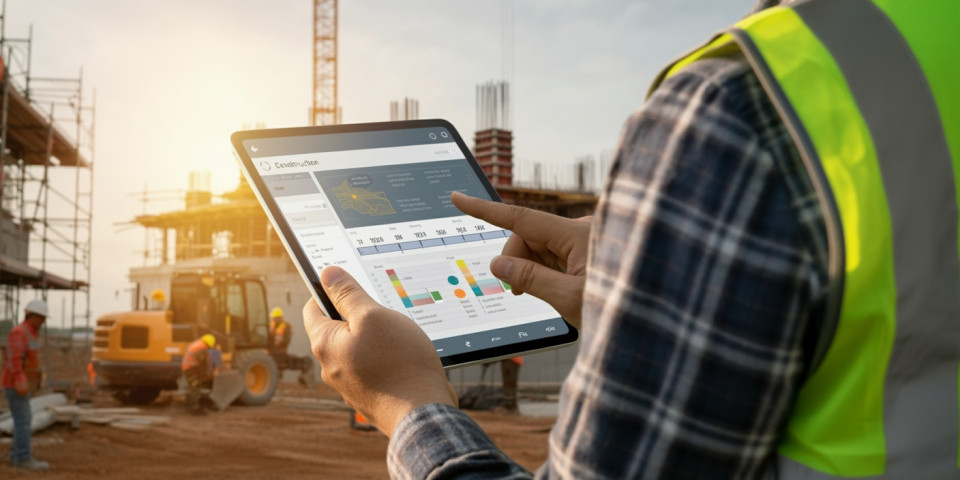
The construction industry has always been high-risk, with hazards constantly evolving across different sites, teams, and project phases. Traditionally, safety has been reactive, with lessons learned after incidents occur.
That approach is changing.
Artificial Intelligence (AI) and predictive analytics are now helping construction businesses take a more proactive approach to safety. By identifying risks earlier, they support better decision-making on site and influence how safety knowledge is delivered and reinforced.
However, while AI is a powerful tool, it is not a replacement for training, experience, or human judgement. It should be seen as something that strengthens and supports them.
What is Predictive Analytics in Construction Safety?
Predictive analytics uses AI and machine learning to analyse data such as past incidents, near misses, site conditions, and behavioural trends.
The aim is simple. Instead of only understanding what has already happened, it helps identify what is likely to happen next.
This can include:
- Highlighting high-risk activities
- Identifying patterns linked to incidents
- Flagging potential hazards before they escalate
Used correctly, this allows earlier intervention and better planning.
How Predictive Analytics is Improving Construction Safety
One of the biggest benefits of predictive analytics is its ability to support a more proactive safety culture.
Rather than relying solely on incident reports and investigations, businesses can:
- Anticipate risks before they materialise
- Focus attention on higher-risk areas
- Allocate resources more effectively
This shift helps reduce incidents, but it also changes how safety is communicated. Safety becomes something that is continuously reviewed and adapted, rather than something revisited only after something has gone wrong.
How AI is Improving Construction Safety Training
Making Training More Relevant Using Real Risk Data
AI can help highlight common risk trends across the industry, which can be used to inform how safety topics are delivered. As explored in our recent blog on how AI is redefining health and safety training, the industry is already moving towards more responsive and practical approaches to learning.
While formal courses follow set schemes and learning outcomes, experienced trainers can still:
- Emphasise higher-risk activities that are currently impacting the industry
- Use real examples and recent incident trends to support key topics
- Encourage discussion around risks learners are likely to face on site
At Essential Site Skills, this is supported by trainers bringing real site experience into the classroom, helping learners understand how risks apply in practice.
This approach helps make learning more relevant without moving away from required course content.
Continuous Learning Through Courses and Toolbox Talks
Formal safety courses provide a strong foundation, but much of the day-to-day learning on site happens through toolbox talks, briefings, and ongoing supervision.
AI and digital tools can support this by helping employers identify:
- Areas where additional briefings may be needed
- Recurring risks that should be reinforced
- Topics that require refresher discussions
This helps reinforce knowledge over time rather than relying on a single course.
Using AI Insights in Toolbox Talks and Site Safety Briefings
For many construction businesses, the most effective safety communication happens through regular toolbox talks and site briefings.
This is where predictive insights can be applied in a practical way on site.
Rather than delivering generic safety messages, data can be used to shape toolbox talks around:
- Current site risks
- Recent near misses or incident trends
- High-risk activities planned for the day or week
For example, if there is an increase in working at height incidents across similar projects, this can be reflected in a targeted toolbox talk.
This makes safety briefings more relevant to the task in hand, more engaging for operatives, and more likely to influence behaviour on site.
Scenario-Based Learning in Construction Safety Training
Insights from incident data can also support more realistic learning discussions.
For example:
- Working at height risks based on common incident trends
- Typical plant and equipment hazards
- Situations that reflect real site conditions
This supports understanding and helps learners apply knowledge more effectively once they return to site.
Moving Beyond Tick-Box Safety Training
There is an increasing shift in the industry away from viewing safety purely as a compliance exercise.
Completing a course is important, but employers are placing greater emphasis on:
- Ongoing competence
- Behaviour on site
- The ability to apply knowledge in real situations
Training providers play a key role in supporting this by focusing on practical understanding, not just certification.
Why Training and Human Judgement Still Matter in Construction Safety
While AI can provide useful insights, it is only as reliable as the data it is based on.
There are several limitations to consider:
- Data can be incomplete or inaccurate
- Systems may not reflect specific site conditions
- AI cannot fully interpret human behaviour or decision-making
This is where training remains essential.
Competent workers are able to:
- Question information where necessary
- Apply judgement in changing conditions
- Make safe decisions when situations do not follow expected patterns
Without proper understanding, there is a risk that AI outputs could be misinterpreted or relied on too heavily.
Risks of Over-Reliance on AI in Construction Safety
There is also a need to ensure that AI is used responsibly.
Over-reliance on automated systems can lead to:
- Reduced situational awareness
- Assumptions that risks are fully controlled
- Missed hazards that fall outside of recognised patterns
Construction environments are constantly changing, and not all risks can be predicted.
This reinforces the importance of:
- Strong safety culture
- Competent supervision
- High-quality, practical learning
AI should support decision-making, not replace it.
What AI Means for Construction Employers and Training Providers
For employers, AI offers an opportunity to better understand risk and improve safety performance.
For training providers, it highlights the importance of delivering learning that reflects real-world conditions.
This includes:
- Reinforcing key risks through both courses and site briefings
- Supporting ongoing competence, not just initial learning
- Ensuring learners understand how to apply knowledge in practice
At Essential Site Skills, this aligns with a focus on practical, site-based understanding across all courses.
How to Apply Predictive Insights on Site
You do not need advanced AI systems to start taking a more proactive approach to safety.
Many of the benefits of predictive thinking can be applied using information already available within your business.
1. Review Your Incident and Near Miss Data
Start by looking at:
- Recent incidents
- Near misses
- Recurring hazards
Look for patterns. Are certain activities, locations, or tasks appearing more frequently?
This gives you a simple starting point for identifying higher-risk areas.
2. Use This Information in Toolbox Talks
Instead of rotating through generic topics, base your toolbox talks on:
- Current risks on your project
- Recent incidents within your company
- Seasonal or environmental factors
For example, if slips and trips are increasing due to weather conditions, this should be reflected in your next briefing.
3. Focus on High-Risk Activities
Prioritise activities that carry the greatest risk, such as:
- Working at height
- Lifting operations
- Plant and vehicle movements
Ensure these are regularly reinforced through both training and site briefings.
4. Encourage Two-Way Communication
Site teams often spot risks before they are formally recorded.
Encourage:
- Open discussion during toolbox talks
- Feedback from operatives
- Reporting of near misses
This helps build a clearer picture of real site conditions.
5. Reinforce Learning Beyond the Course
Use site briefings and supervision to:
- Revisit key topics from formal courses
- Check understanding in practice
- Address gaps early
This ensures learning is applied, not just completed.
6. Introducing AI and Digital Safety Tools
For businesses looking to take this further, AI-powered safety tools can support the process by analysing data more quickly and identifying patterns that may not be immediately visible.
This can include:
- Software that tracks incidents and near misses
- Digital reporting tools that highlight recurring risks
- Systems that monitor site activity and flag unsafe behaviours
In most cases, these tools work alongside existing processes rather than replacing them.
It is important to ensure that:
- Data being input is accurate and consistent
- Outputs are reviewed by competent people
- Decisions are not based solely on automated insights
For many organisations, the starting point is not advanced AI, but improving how existing data is collected and used. AI can then be introduced gradually to support more informed decision-making.
For example, some companies use digital reporting apps that automatically highlight repeat incidents across multiple sites, helping safety teams prioritise their response.
This approach can be implemented by site managers, supervisors, and safety leads without the need for specialist systems.
Examples of AI and Digital Tools Used in Construction Safety
Many construction businesses are already using digital tools to support a more proactive approach to safety, even if they are not formally referring to it as AI.
Some examples include:
- Procore
Used to track site activity, incidents, and safety observations across projects, helping identify recurring risks. - HammerTech
Focuses on safety compliance, inspections, and contractor management, with data used to highlight trends. - EcoOnline
Supports incident reporting and risk management, helping organisations analyse safety performance over time.
These types of systems allow businesses to:
- Centralise safety data
- Identify patterns across multiple sites
- Support more informed decision-making
It is important to note that these tools are most effective when supported by strong processes and competent teams. Technology should enhance existing safety management, not replace it.
Combining AI and Training for Better Construction Safety Outcomes
AI and predictive analytics are helping the construction industry take a more informed approach to safety.
However, technology alone is not the solution.
The strongest outcomes are achieved when data insights are combined with practical experience and effective learning. Workers need to understand not just what to do, but why they are doing it, and how to respond when situations change.
By combining predictive insights with high-quality training and clear site communication, businesses can improve safety performance while ensuring their workforce is prepared for real-world conditions.
Need Support with Construction Safety Courses?
Essential Site Skills delivers a wide range of health and safety courses designed to support compliance, competence, and real-world application.
Whether you are looking to upskill your workforce or improve safety performance across your sites, our team can help you find the right solution.
Explore our courses or speak to our team to find the right solution for your workforce.