


Latest News
HSE Crackdown on Silica Dust: What Construction Businesses Should Know
Posted on Friday, 15th May 2026
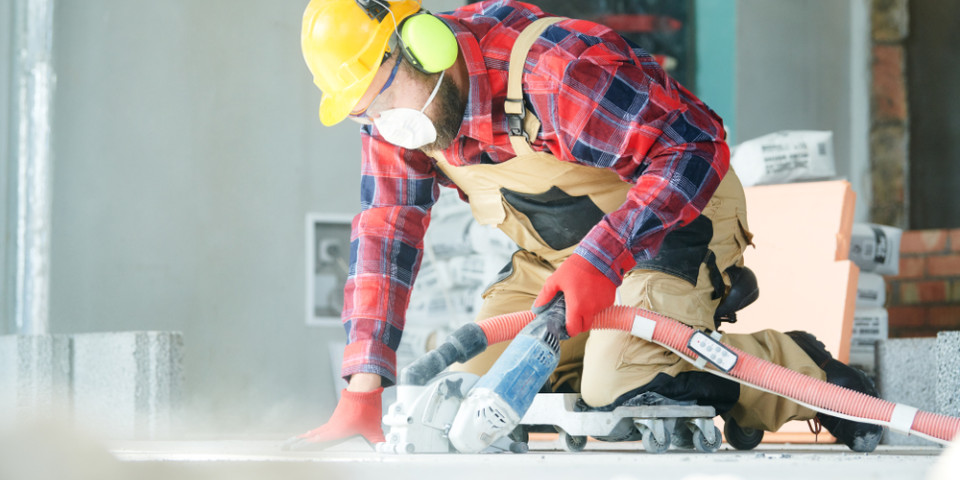
The Health and Safety Executive has announced a new inspection crackdown focused on silica dust exposure, following the publication of new guidance on engineered stone.
Over the next 12 months, HSE inspectors are expected to carry out more than 1,000 visits across Great Britain, with enforcement action possible where businesses are not meeting the required standards.
The announcement is particularly focused on engineered stone, including materials commonly used for kitchen and bathroom worktops. However, the wider message is relevant across the construction industry. Dust exposure remains one of the most serious occupational health risks facing workers, and businesses must be able to demonstrate that suitable controls are in place.
For construction employers, contractors, supervisors and site managers, this is a timely reminder to review how dust risks are identified, controlled and communicated on site.
Why is HSE focusing on silica dust?
Silica is found in many common construction materials, including concrete, stone, bricks, tiles, mortar and engineered stone. When these materials are cut, drilled, ground or polished, they can release respirable crystalline silica, often referred to as RCS.
RCS is made up of very fine dust particles that can be breathed deep into the lungs. The danger is that these particles may not always be visible in the air, but they can still cause serious long-term health problems.
The latest HSE announcement highlights that engineered stone can contain very high levels of crystalline silica, making effective controls essential. Exposure to respirable crystalline silica can cause serious lung diseases, including silicosis, chronic obstructive pulmonary disease and lung cancer.
Unlike an immediate site injury, the effects of dust exposure may not be obvious straight away. Workers can be exposed over time before symptoms appear, which is why prevention, control measures and awareness are so important.
What has HSE announced?
HSE has published new guidance making clear that dry cutting of engineered stone is unacceptable.
The guidance explains that water suppression techniques should be used to help meet the legal requirement to control exposure to silica dust.
The new guidance will be supported by a nationwide inspection programme. HSE has stated that inspectors will carry out more than 1,000 visits to fabricators across Great Britain over the next 12 months, with enforcement action taken where businesses fail to meet the required standards.
Although the latest announcement focuses on engineered stone fabricators, construction businesses should not see this as a niche issue. Silica dust is created by many everyday construction tasks, including cutting paving slabs, chasing brickwork, drilling concrete, grinding mortar and using powered tools on stone-based materials.
What does this mean for construction businesses?
The message for construction businesses is clear: dust control cannot be treated as an afterthought.
Employers and contractors need to make sure they have suitable risk assessments, safe systems of work and control measures in place before work begins. This includes considering whether the work can be avoided, whether safer methods can be used, and how exposure can be reduced at source.
For site-based work, this means businesses should be asking questions such as:
Is the task likely to create silica dust?
Can the material be cut, drilled or prepared in a safer way?
Are water suppression or on-tool extraction systems being used?
Is the correct respiratory protective equipment being worn?
Has the RPE been face fit tested?
Have workers been properly instructed on the risks and controls?
Are supervisors checking that controls are being used correctly?
It is not enough to have equipment available if it is not being used properly. HSE inspections often look at what is happening in practice, not just what is written in the paperwork.
Common construction tasks that can create silica dust
Silica dust can be produced during a wide range of construction activities. These may include:
Cutting concrete blocks, kerbs, paving slabs or roof tiles
Grinding or chasing brickwork and mortar
Drilling into concrete or masonry
Cutting or polishing natural stone
Working with engineered stone products
Breaking out concrete
Using powered tools without suitable dust control
Sweeping or dry brushing dusty areas
Some of these tasks may only take a few minutes, but repeated short-term exposure can still add up. This is why businesses need to consider dust risks across the whole working day, not just during large or obvious cutting tasks.
Control measures should come before relying on masks
Respiratory protective equipment has an important role, but it should not be the first or only control measure.
Where possible, exposure should be reduced at source. This may include using different methods of work, wet cutting, water suppression, on-tool extraction, local exhaust ventilation, suitable cleaning methods and better planning of dusty tasks.
RPE should then be used where there is still a remaining risk. If workers are required to wear tight-fitting masks, those masks must be suitable, worn correctly and face fit tested.
This is where businesses often fall short. A mask that does not fit properly may not provide the protection the wearer expects. Facial hair, incorrect sizing, poor storage, damage, lack of instruction or incorrect use can all affect protection.
Why face fit testing matters
Face fit testing is essential where workers are required to wear tight-fitting respiratory protective equipment. This includes many disposable and reusable masks used to protect against construction dust.
A face fit test checks that the selected mask fits the individual wearer and can form an adequate seal to the face. Without this, contaminated air can leak in around the edges of the mask.
For businesses that regularly use RPE, having competent people in-house can make it easier to manage face fit testing properly and consistently.
Essential Site Skills offers a Face Fit Train the Tester Course, designed for those who need to carry out qualitative face fit testing within their organisation. This can help businesses improve internal competence and ensure workers using tight-fitting RPE are properly tested.
Do not overlook asbestos risks
The latest HSE announcement focuses on silica dust, but it also sits within a much wider issue: construction workers are still exposed to serious long-term health risks from hazardous materials.
Asbestos remains one of the most significant dangers in the built environment, particularly when working on older buildings. Before drilling, cutting, refurbishing, demolishing or disturbing materials, workers need to understand whether asbestos could be present and what action to take.
This is why asbestos awareness remains a key part of construction health and safety. Workers should be able to recognise where asbestos may be found, understand the risks, and know when to stop work and seek guidance.
Essential Site Skills offers a UKATA Asbestos Awareness Course, suitable for workers who may come across asbestos-containing materials during their work.
What should employers and site managers review now?
With HSE placing renewed attention on dust control, construction businesses should take the opportunity to review their current arrangements.
1. Risk assessments
Make sure silica dust risks are properly considered in task-specific risk assessments and method statements. Generic paperwork may not be enough if it does not reflect the actual materials, tools and working conditions.
2. Work methods
Avoid dry cutting where safer alternatives are available. Consider whether wet methods, pre-cut materials or alternative processes can reduce dust exposure.
3. Dust control equipment
Check that water suppression, on-tool extraction and other controls are suitable for the task and maintained correctly.
4. RPE
Review whether the RPE provided is appropriate for the hazard, compatible with other PPE and suitable for the individual wearer.
5. Face fit testing
Check that workers using tight-fitting RPE have had a face fit test for the specific make, model and size of mask they are wearing.
6. Worker awareness
Make sure workers understand why dust controls matter. If workers do not understand the risk, they are less likely to use controls consistently.
7. Supervision
Supervisors and managers should be checking that controls are actually being used on site, especially during short-duration tasks where workers may be tempted to cut corners.
8. Cleaning methods
Avoid dry sweeping where dust may be disturbed. Use suitable methods to clean dusty areas without increasing airborne exposure.
9. Health surveillance
Where workers may be exposed to respirable crystalline silica, employers should consider whether health surveillance is required under COSHH.
Why awareness and competence matter
Dust risks are not always obvious. A site can look clear while harmful particles are still airborne. A task can seem quick while still creating a serious exposure risk. A mask can appear protective while failing to seal properly.
This is why awareness, competence and supervision matter.
Construction businesses need workers who understand the risks, supervisors who can identify poor practice, and systems that make safe working the normal way of doing the job.
The renewed HSE focus on silica dust should prompt businesses to look closely at how they manage occupational health risks, not just immediate safety hazards.
Essential Site Skills can help
Essential Site Skills offers a range of courses to support construction health and safety awareness, respiratory protection and hazardous materials awareness.
For businesses reviewing dust control and respiratory protection arrangements, the Face Fit Train the Tester Course can help develop in-house competence for qualitative face fit testing.
For those working in refurbishment, maintenance, demolition or older buildings, the UKATA Asbestos Awareness Course helps workers understand the dangers of asbestos and what to do if they suspect asbestos-containing materials may be present.
Taking action now can help businesses protect workers, improve compliance and demonstrate that health risks are being taken seriously.
You can also contact the Essential Site Skills team for help choosing the right course for your business.